Category

insomnia

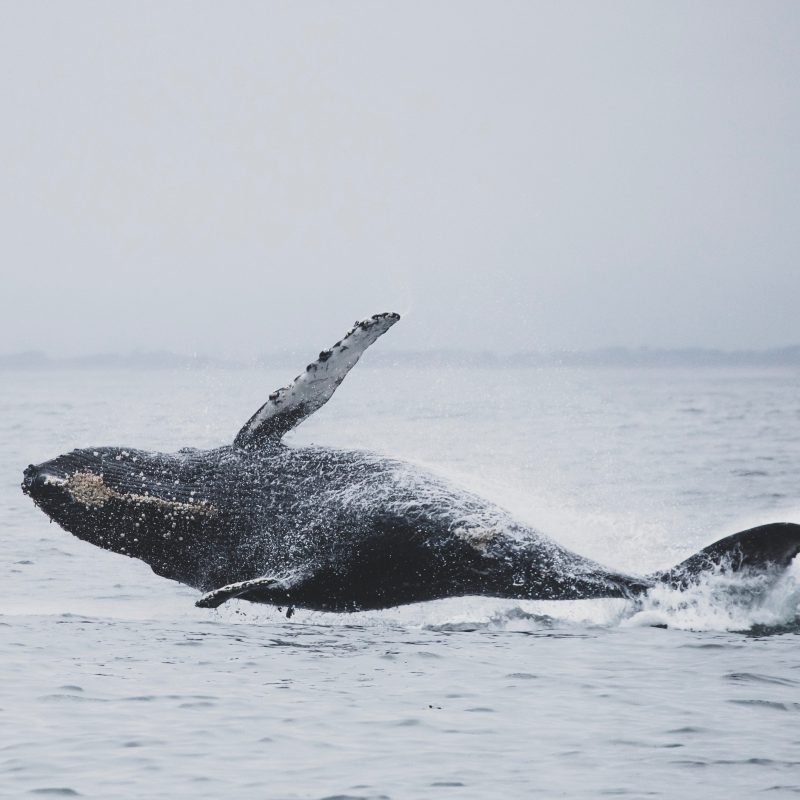
The solution to insomnia – whale watching

By cognitive behavioral therapy for insomnia, healthy sleep, insomnia

When we have a problem – we want to solve it. Nothing surprising about that. A strategy that almost always is the right one.

Got a leaky faucet – call the plumber. Annoying headache – take some ibuprofen. Can’t find the car keys – figure out where you most likely put them and look there.

For most problems, the solution likes in taking action and/or figuring out what caused it so that can be addressed.

With insomnia, things are different. It is the process of trying to fix the problem that maintains the problem. To solve it, you have to use a strategy that may go against all your emotions and instincts…

….go whale watching.

When you do something enjoyable like taking in the spectacle of huge water living mammals migrating up the coast, you step away from trying to sleep, wanting to sleep and trying to figure out why you’re not sleeping.

Behavioral activation is the technical term for doing stuff you enjoy. If not whale watching then perhaps baking, synchronized diving or yoga. It really doesn’t matter as long as your attention shifts away from sleep.

Attention is oxygen for insomnia. It cannot survive without us thinking about it, trying to do things to sleep and studying our sleeplessness.

Get that behavioral activation going, leave the insomnia without oxygen, and sleep better forever!

Keep Hiking

By cognitive behavioral therapy for insomnia, healthy sleep, insomnia

One of the most common questions I get from people is what to do after having started to use the “sleep tight” technique or bedtime restriction and still not getting more ZZZs – what do I do now?

This could be someone that did better initially but then had a night of sleeping almost nothing. It can be someone that has limited time in bed for 3 weeks and hasn’t noticed any changes. Or someone that feels they’ve hit a plateau after some improvement.

Here’s the thing – people with trouble sleeping want to solve that problem. But the attempts at trying to solve it ends up being what keeps sleeplessness going. The instinct when nothing is happening or you’ve had a setback is to tweak things , change direction or try something different. But the best thing do to is the opposite – stay the path.

A really good way to think about this is to imagine yourself hiking up to a mountain top. At the summit is a place of really good sleep.

As you are making your way up, you are very likely to stumble on a root or a rock. That’s expected. If you stop and examine the root that made you trip, if you wonder why it happened, why it is sitting there and how you can avoid this happening again, you’ll never reach the top.

Not reacting, just keep moving forward is the best thing to do.

The less you react when you have a setback or when it feels like progress is slow, the sooner you’ll reach that place of amazing sleep.

Don’t worry about your health

By healthy sleep, insomnia

Did you know that ash trays are associated with COPD? If not, do know that there is a strong link between the two. There is even a dose-response relationships: the more ash trays someone has, the more likely they are to have COPD.

Does this mean that ash trays cause COPD? That has never been proven. In fact it is believed that it is smoking cigarettes that is the culprit and not those ash trays.

Now what does this have to do with sleep? Quite a bit it turns out.

Sleep is like the ash trays in this example. Many health issues have been associated with sleep duration, but a causal relationship has never been found. And here’s whats really important to know – it is impossible to prove that how much you sleep causes health problems and long sleep is much more strongly linked to mortality than short sleep.

Let’s look at feasibility of proving that short sleep causes Alzheimer’s disease. To prove that one thing causes another you will need a randomized study with two imposed conditions. You would need thousands of people and make half of them sleep deprived and make sure the other half slept a lot. After decades of maintaining both groups short and long sleepers respectively you could look at whether Alzheimer’s happened more in the sleep deprived or non sleep deprived group.

Needless to say – a study like this will never happen. Therefore it is not possible to prove that short sleep causes any disease or health issue.

Looking at the existing link between all cause mortality (dying early for any reason) and sleep duration you find the following – having an estimated sleep duration of more than 7 hours and less than 6 hours are linked to an increased risk. Someone who feels they sleep 8 hours has an equally increased risk as someone estimating 5 hours of sleep.

If the belief is that there is a causal relationship between sleep duration, well then we should be warned not to sleep more than 7 hours. Conveniently for an industry that wants to sell products to make you sleep more, the link between long sleep and premature death is consistently overlooked.

So why is there a link between short and long sleep and premature death?

Probably because health issues can affect how much you estimate sleeping in both directions. Having arthritis and pain can disrupt your sleep and lower your estimated sleep time. Heart failure can make you tired, spend more time in bed and increase the amount of time you feel that you sleep.

Knowing that short sleep has not been shown to cause any health issues can be really reassuring to someone with insomnia.

Because as you know, worrying less is the first step towards sleeping amazing!